Collector resource in the CATDOLL library.
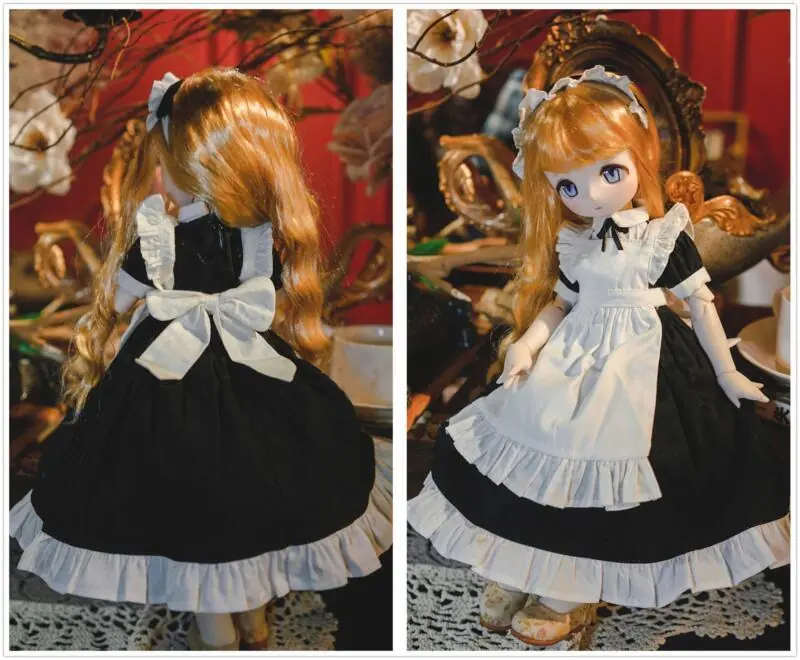
There’s something undeniably magical about a BJD doll dressed in a beautifully crafted vintage skirt — the soft layers of lace, the structured silhouette, the miniature pleats that mirror a bygone era. Whether you’re dressing a 1/3-scale SD, a petite MSD, or a Blythe doll, making a vintage skirt from scratch is one of the most rewarding projects in the BJD hobby. It demands patience and precision, but the results are truly heirloom-worthy.
This guide is designed for crafters with basic sewing knowledge who want to take their doll wardrobe to the next level. We’ll cover fabric selection, pattern drafting, construction techniques, and finishing details — everything you need to create a vintage skirt that looks like it belongs in a 19th-century portrait.
Step 1: Understand Your Doll’s Measurements
Before you cut a single piece of fabric, accurate measurements are essential. BJD bodies vary significantly by brand and scale, so never assume a universal fit.
Key measurements to take:
- Waist circumference — measure snugly around the narrowest part of the torso
- Hip circumference — measure at the fullest point
- Skirt length — from waist to desired hem (floor-length, tea-length, or mini)
- Waist depth — the distance from waist to hip, which determines where your waistband sits
Record everything in millimeters for maximum accuracy. A difference of even 2mm can affect how a garment drapes at 1/4 scale.
Step 2: Choose Your Fabrics Wisely
Fabric choice is everything in miniature sewing. At doll scale, heavyweight materials create stiff, unflattering silhouettes, while the right lightweight fabrics will drape and gather beautifully.
Best fabrics for a vintage BJD skirt:
- Cotton lawn or batiste — lightweight, slightly sheer, ideal for petticoats and gathered underskirts
- Silk dupioni or faux silk taffeta — gives structured volume with a subtle sheen, perfect for overskirts
- Velvet (micro or stretch velvet) — excellent for Victorian or Edwardian-style skirts; use sparingly as it adds bulk
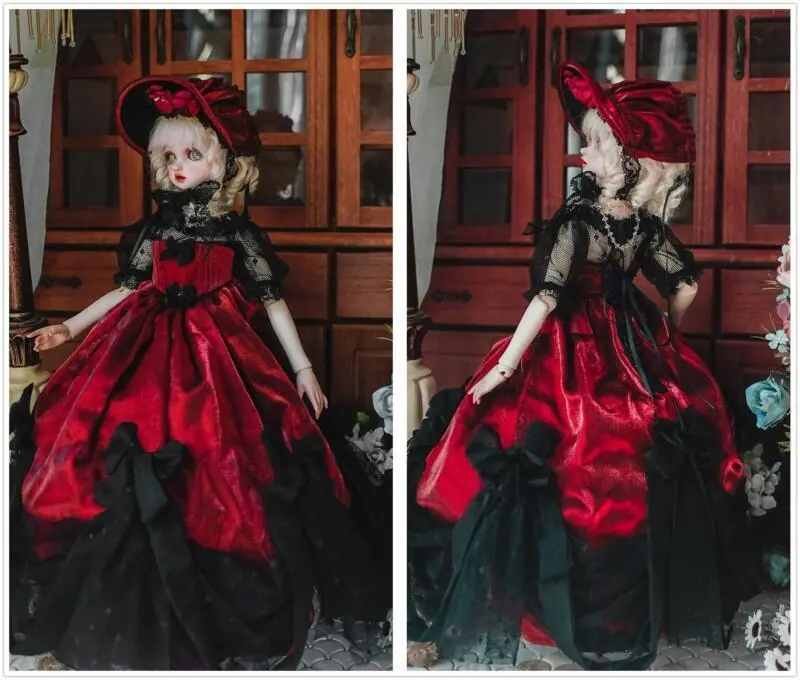
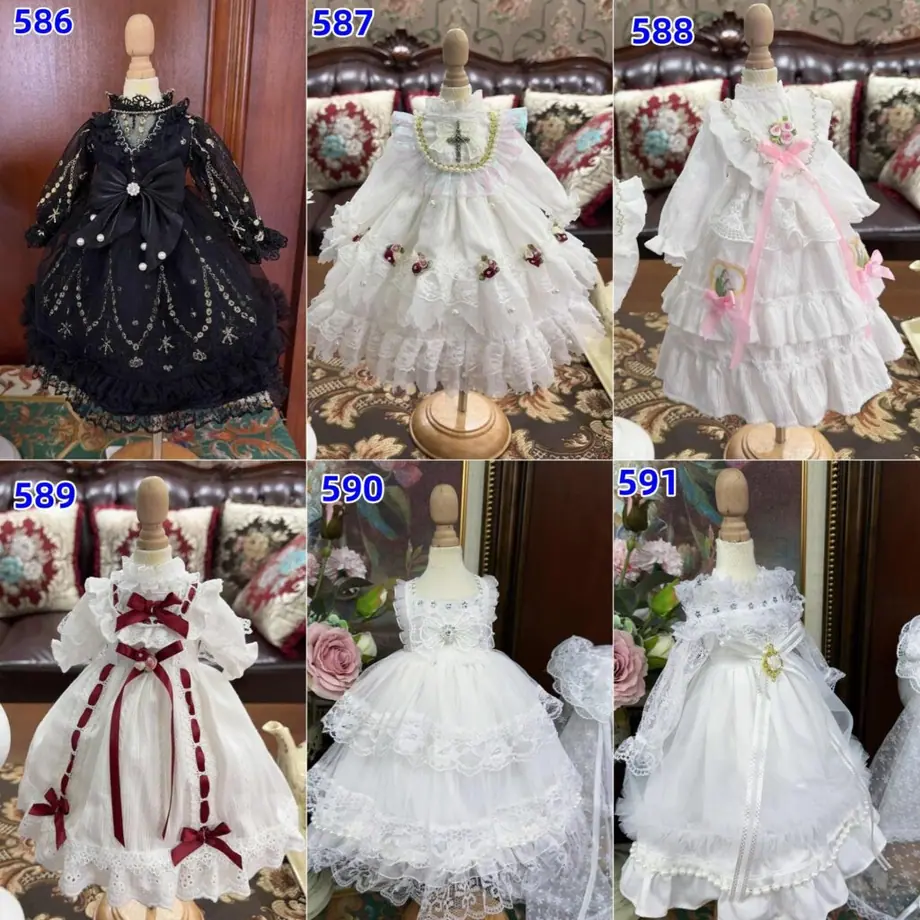
- Lace overlay fabric — a classic choice for the outer layer of a romantic or Gothic vintage look
- Organza — creates crisp, floaty layers for a fairy-tale silhouette
Avoid denim, canvas, fleece, or any fabric with a coarse weave — these resist folding at small seam allowances and will make your finished piece look stiff and chunky.
Pro tip: Always prewash your fabric before cutting. Even miniature garments can warp if the fabric shifts after the first light cleaning.
Step 3: Draft Your Pattern
You’ll rarely find a commercial pattern that fits your specific doll, so drafting your own is a core skill worth developing.
For a classic A-line or gathered vintage skirt, you’ll need:
- Waistband piece — cut to waist circumference + 1cm seam allowance on each side, and approximately 1.5–2cm wide
- Skirt panel(s) — for a gathered skirt, cut 1.5× to 2× the waist measurement in width; for a pleated skirt, allow 3× for deep, structured pleats
- Underskirt or petticoat panel — slightly shorter than the overskirt, cut from cotton lawn or net/tulle
Seam allowances for BJD garments: Use 3–5mm throughout. Standard 1cm allowances are far too bulky at miniature scale.
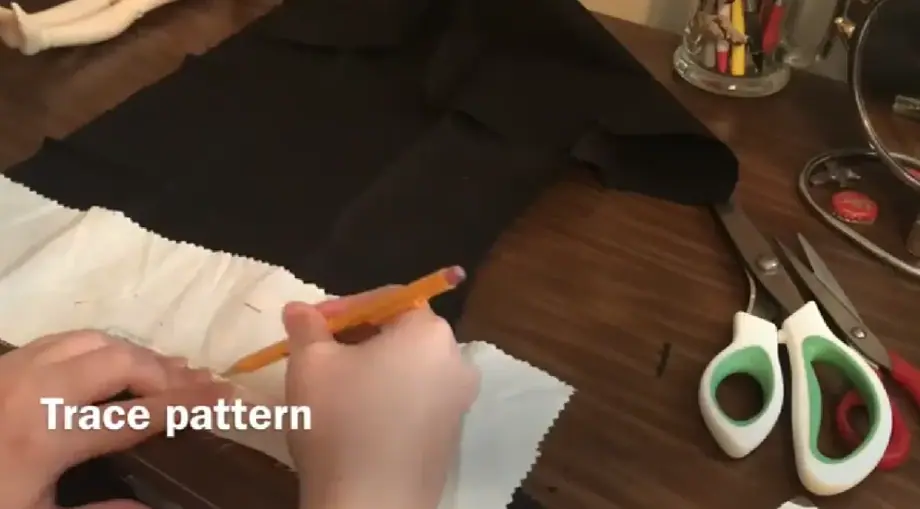
Draft directly onto pattern paper or tracing paper, then test your pattern with cheap muslin before cutting your fashion fabric. Adjustments are always easier at the mock-up stage.
Step 4: Cut and Prepare Your Pieces
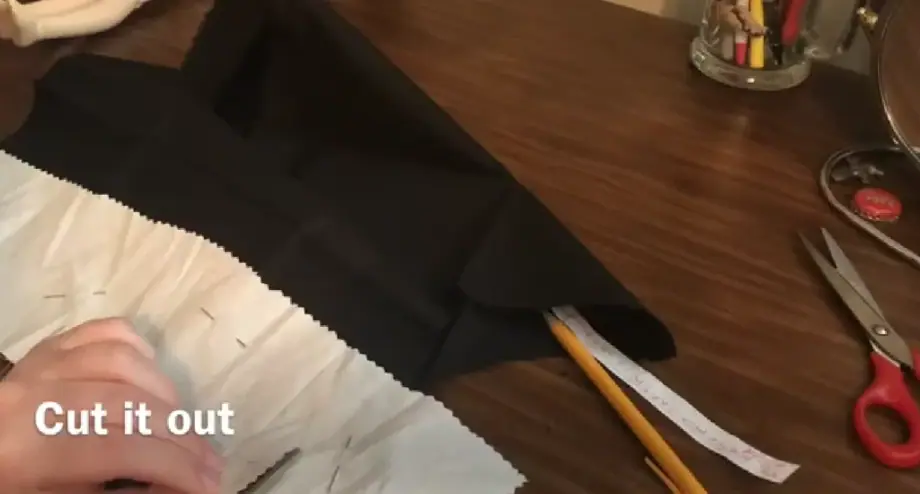
Once your pattern is tested and refined, transfer it to your fashion fabric.
- Use sharp fabric scissors or a rotary cutter — dull blades drag and distort fine fabrics
- Place pattern pieces on grain (parallel to the selvage) to ensure proper drape
- Mark all notches, fold lines, and gathering points with a fine chalk pencil or tailor’s tacks
- Stay-stitch curved edges (like a shaped hem) immediately after cutting to prevent stretching
If you’re working with lace overlay, align the pattern motifs intentionally — centering a floral motif at the front panel, for example, elevates the finished piece considerably.
Step 5: Construct the Skirt
Now the real work begins. Work in this order for the cleanest results:
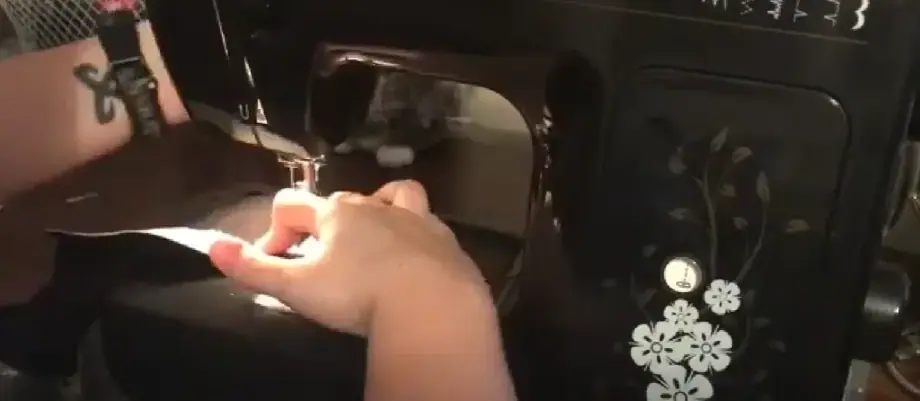
1. Sew the underskirt first. Stitch side seams together, press open, and finish raw edges with a narrow rolled hem or pinking shears. Add any lace trim to the hem at this stage.
2. Gather or pleat the main skirt panel.
- For gathering: run two parallel basting stitches along the top edge (3mm and 5mm from the raw edge), then pull gently to gather evenly to the waist measurement.
- For box pleats: fold, pin, and press each pleat with a mini iron before stitching across the top.
3. Attach the underskirt to the overskirt. Align at the waist edge and baste together, treating them as one layer from this point forward.
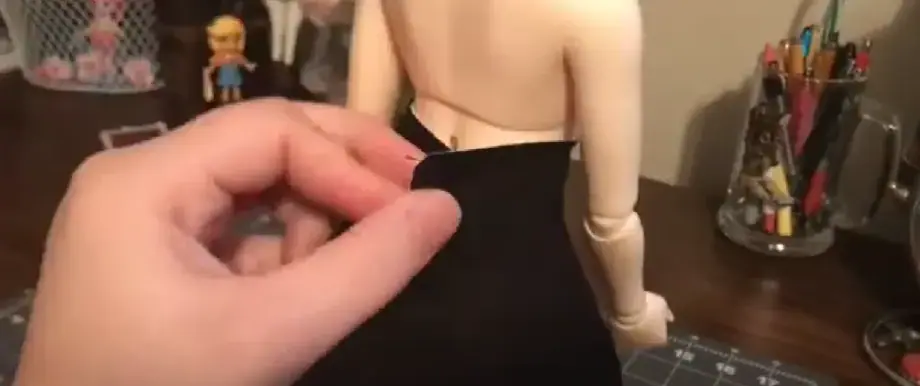
4. Sew the back seam, leaving a 3–4cm opening at the top for the closure.
5. Attach the waistband. Fold the waistband in half lengthwise, press, then stitch to the gathered top edge. Fold over to the inside and slip-stitch closed by hand for the neatest finish.
Step 6: Add Vintage Details and Embellishments
This is where your skirt transforms from merely well-made to truly vintage. Authentic period details make all the difference.
Classic vintage embellishment ideas:
- Ribbon sashing — add a silk ribbon sash at the waist, tied in a large bow at the back
- Lace trim — apply narrow cotton lace along hemlines, tiers, or the waistband edge
- Tiny buttons — use 3–4mm buttons down the back or as decorative accents on the waistband
- Smocking or pintucks — add texture and dimension to the skirt front panel
- Velvet ribbon accents — stitch a thin velvet ribbon around the hem for a Victorian finishing touch
- Fabric flowers — create miniature rolled roses from bias-cut fabric strips and cluster at the hip
Work slowly and use a fine hand needle with silk thread for embellishments — machine stitching often looks too uniform at this scale.
Step 7: Closures and Final Pressing
Closure options for BJD skirts:
- Hook and bar — the most secure and discreet; attach at the waistband
- Snap fasteners — good for quick changes; use size 0 or 00
- Velcro (micro) — practical but can snag delicate fabrics; use only on the interior
- Tie closure — thread ribbon through eyelets for a corset-style back, perfect for Victorian aesthetics
Once the closure is secured, press the entire skirt using a mini iron on a low steam setting. Use a pressing cloth over delicate fabrics. Pay special attention to seams, pleats, and the hem — a well-pressed garment always looks more professional and intentional.
Hang or store your finished skirt flat to maintain its shape between photo sessions.
Final Tips for Vintage Skirt Success
- Work under magnification if possible — detail work at 1/4 scale is much easier with a magnifying lamp
- Press at every stage — pressing seams open as you sew is the single biggest difference between amateur and professional-looking results
- Less is more with embellishment — one beautifully executed detail outshines a dozen busy ones
- Keep a doll journal — record measurements and successful adjustments for each doll so you can reproduce patterns efficiently
🛍️ Complete Your Doll’s Vintage Look with Knewland
Dress the Part — Down to Every Last Detail
A stunning handmade skirt deserves accessories that match its craftsmanship. At Knewland, we specialize in premium, custom-crafted accessories for BJD, Blythe, Reborn, and a wide range of collectible dolls. From delicate lace headpieces and hand-sewn corsets to shoes and complete outfit sets, every piece is designed to complement the artistry you put into your doll’s wardrobe.
Whether you’re building a full Victorian ensemble or sourcing that one perfect finishing touch, our curated collections are made with the same attention to detail that you bring to your craft.
👉 Explore our full range of BJD accessories and custom doll fashion at knewland.com — because every doll deserves to be dressed beautifully.